

When and why is it necessary?
Wisdom teeth usually come in between the ages of 16 and 25, but their eruption doesn’t always go as planned. In many cases, there isn’t enough room in the jaw, which prevents these teeth from coming in properly and can lead to various oral health problems.
Why do wisdom teeth cause problems?
When wisdom teeth lack space or grow in the wrong direction, they can cause:
- Pain and discomfort
- Infections due to bacteria buildup
- Cysts or damage to nearby structures
- Pressure on adjacent teeth, which can make them shift
- Difficulty cleaning, increasing the risk of decay and inflammation
A wisdom tooth can be impacted, partially impacted or poorly positioned, which complicates its eruption and leads to complications.
When is extraction recommended?
Wisdom tooth extraction may be indicated when:
- the tooth is impacted or partially impacted,
- the tooth is growing in the wrong direction,
- there is an infection or inflammation,
- the tooth is damaging or threatening the neighbouring teeth,
- orthodontic treatment requires more space,
- the tooth creates a risk of decay that is hard to treat.
Every situation is unique: our dentists carefully assess your case to determine the best approach.
A common, comfortable and well-managed procedure
Wisdom tooth extraction is a common procedure, done under local anesthesia for your comfort. For patients who are more anxious or nervous about surgery, we can also prescribe anti-anxiety medication to take before the procedure, so the experience is more relaxed.
Depending on the complexity of the case, sedation may also be offered.
Our team makes the procedure as gentle and safe as possible, and guides you through post-operative care for optimal healing.
Assessment before extraction
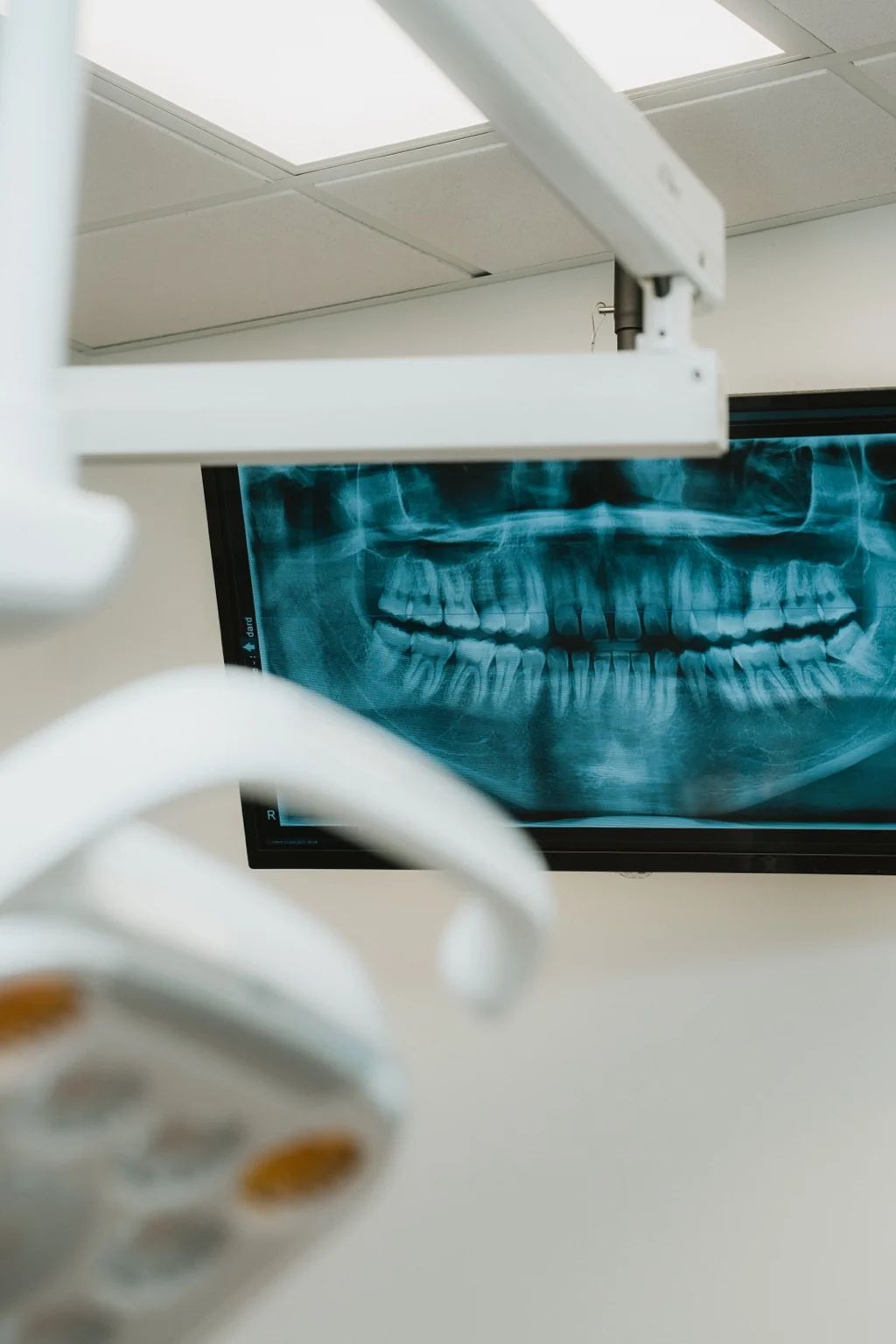
Before any decision, a complete clinical exam and X-rays are essential. This assessment makes it possible to:
- analyze the position of the wisdom teeth,
- check for infection or cysts,
- assess the risks related to eruption,
- determine whether extraction is recommended.
In some cases, extraction is advised as a preventive measure, even before the teeth have fully come in, to avoid future problems.